
AWARDS 27TH EDITION
THE AWARDS OF THE 27TH EDITION OF THE EUROPEAN FILM FESTIVAL
THE AWARDS OF THE 27TH EDITION OF THE EUROPEAN FILM FESTIVAL
EUROPEAN FEATURE FILM COMPETITION
“GOLDEN OLIVE TREE CRISTINA SOLDANO AWARD”
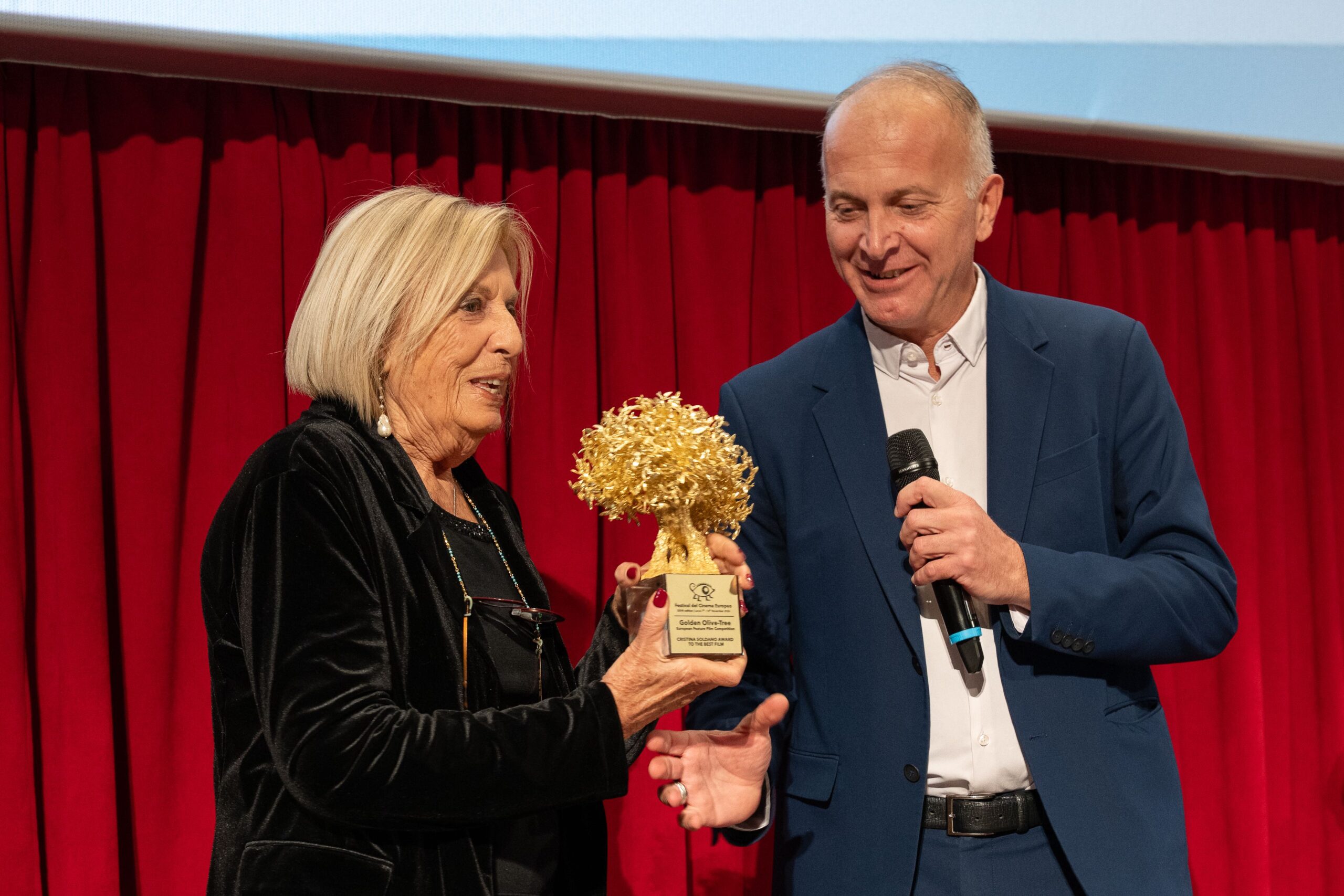
Golden Olive Tree – Cristina Soldano Award
for Best Film
Shame and Money
by Visar Morina
––––––––––––––––––––––––––––––
Special Jury Award
How to Divorce during the War
by Andrius Blaževičius
––––––––––––––––––––––––––––––
Best Cinematography
Federica Ortu
for
L'estate che finì due volte
by Matteo Incollu
––––––––––––––––––––––––––––––
Best Screenplay
Nicole Rüthers and Joscha Bongard
for
Babystar
by Joscha Bongard
––––––––––––––––––––––––––––––
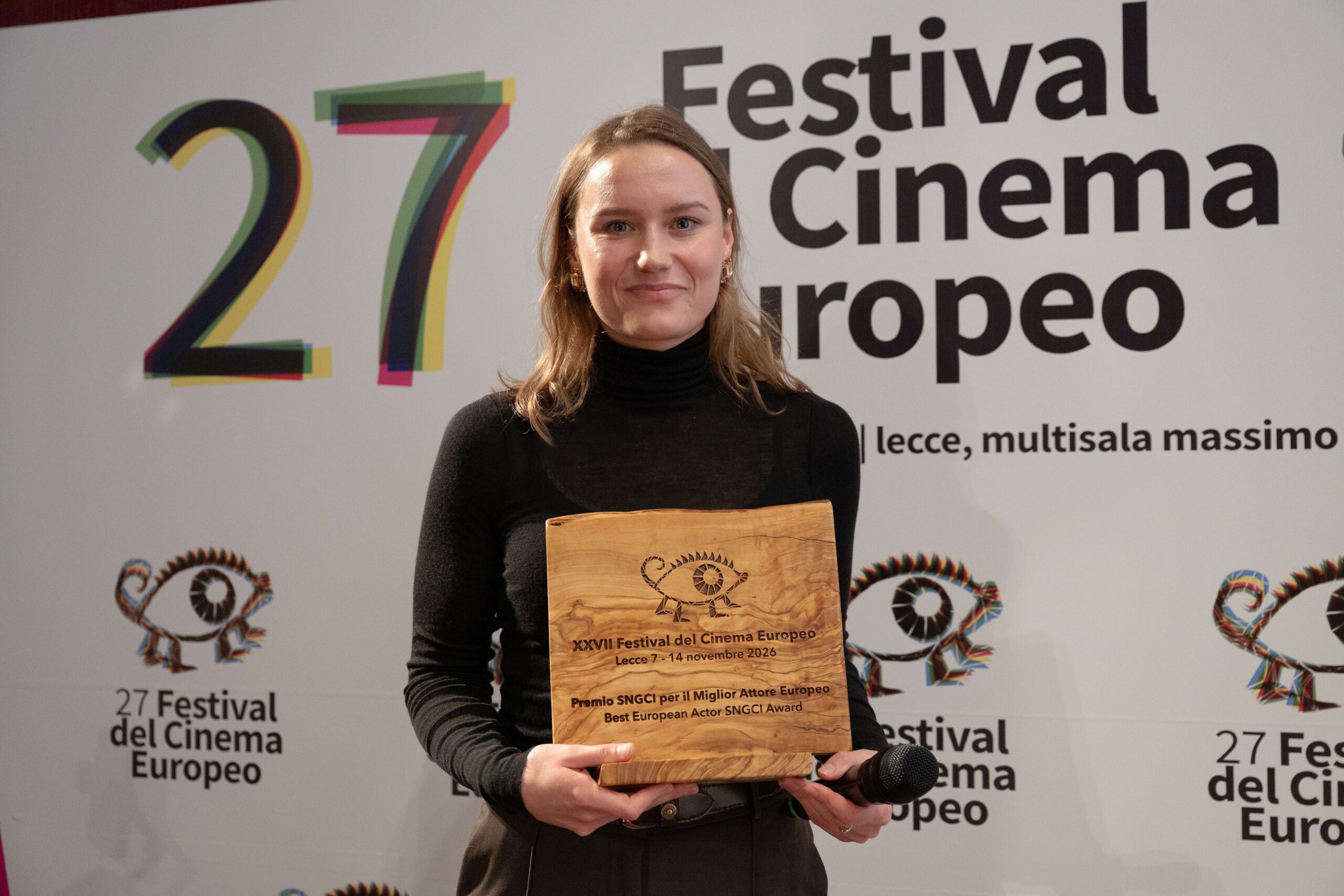
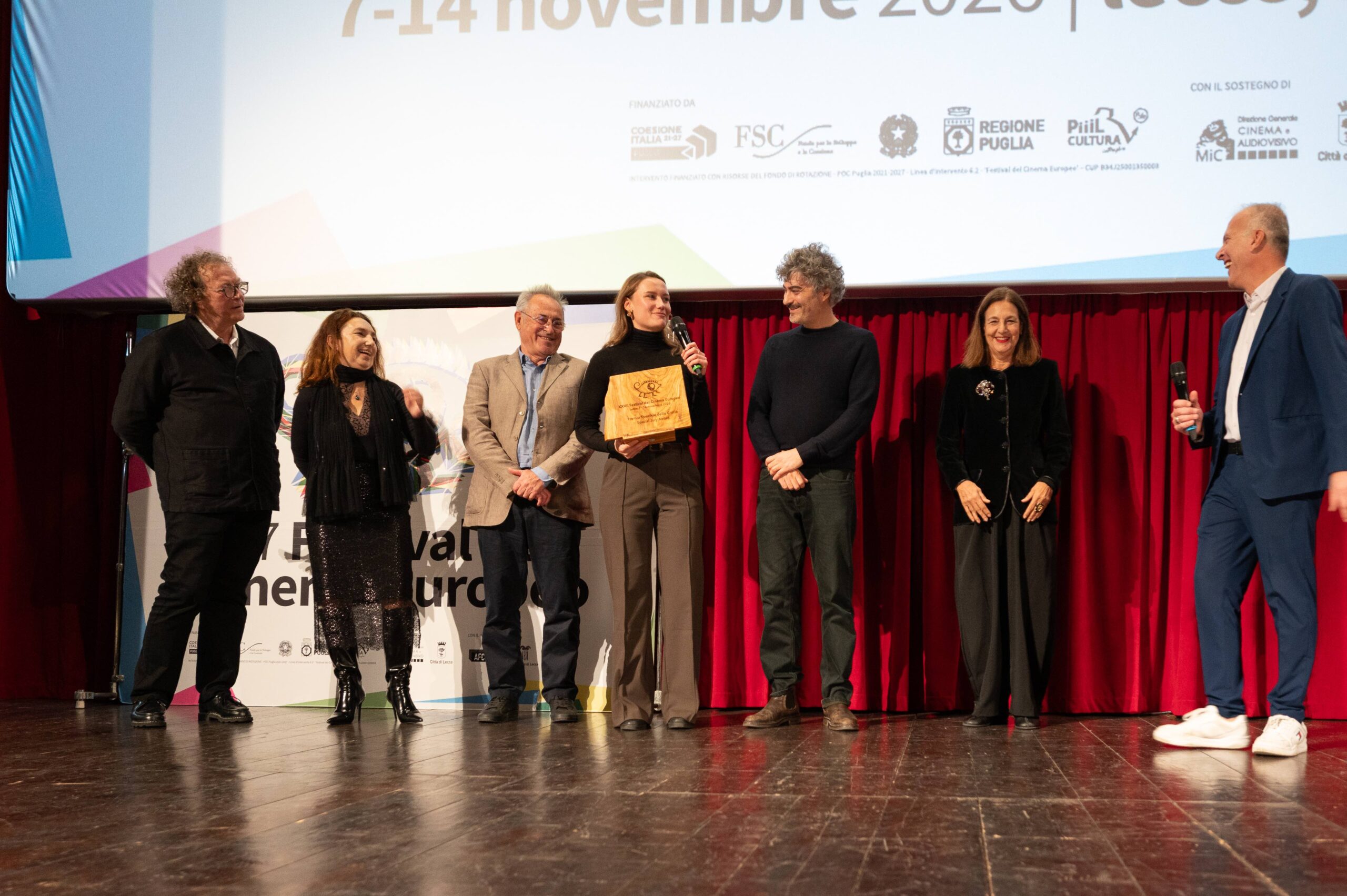
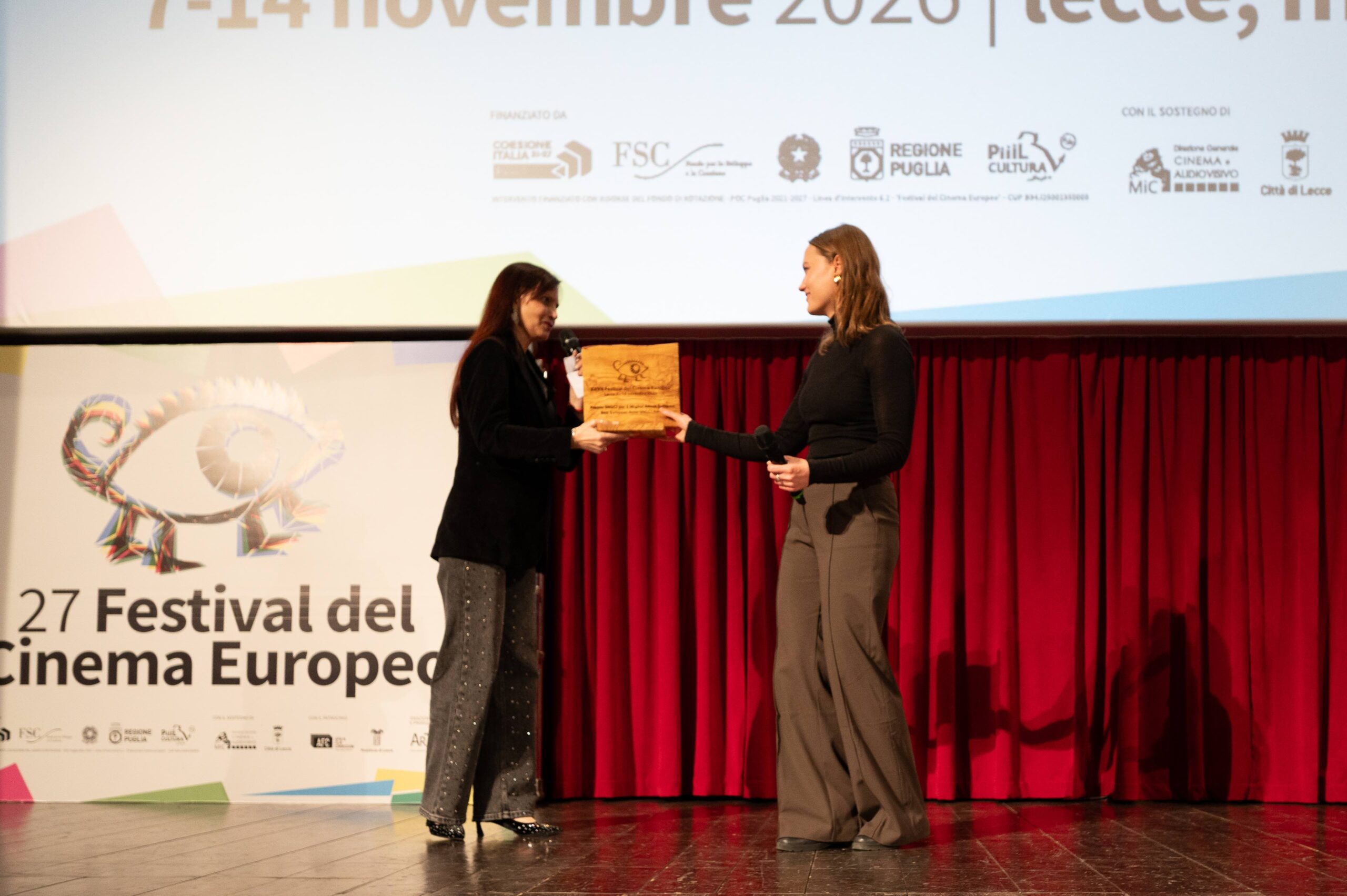
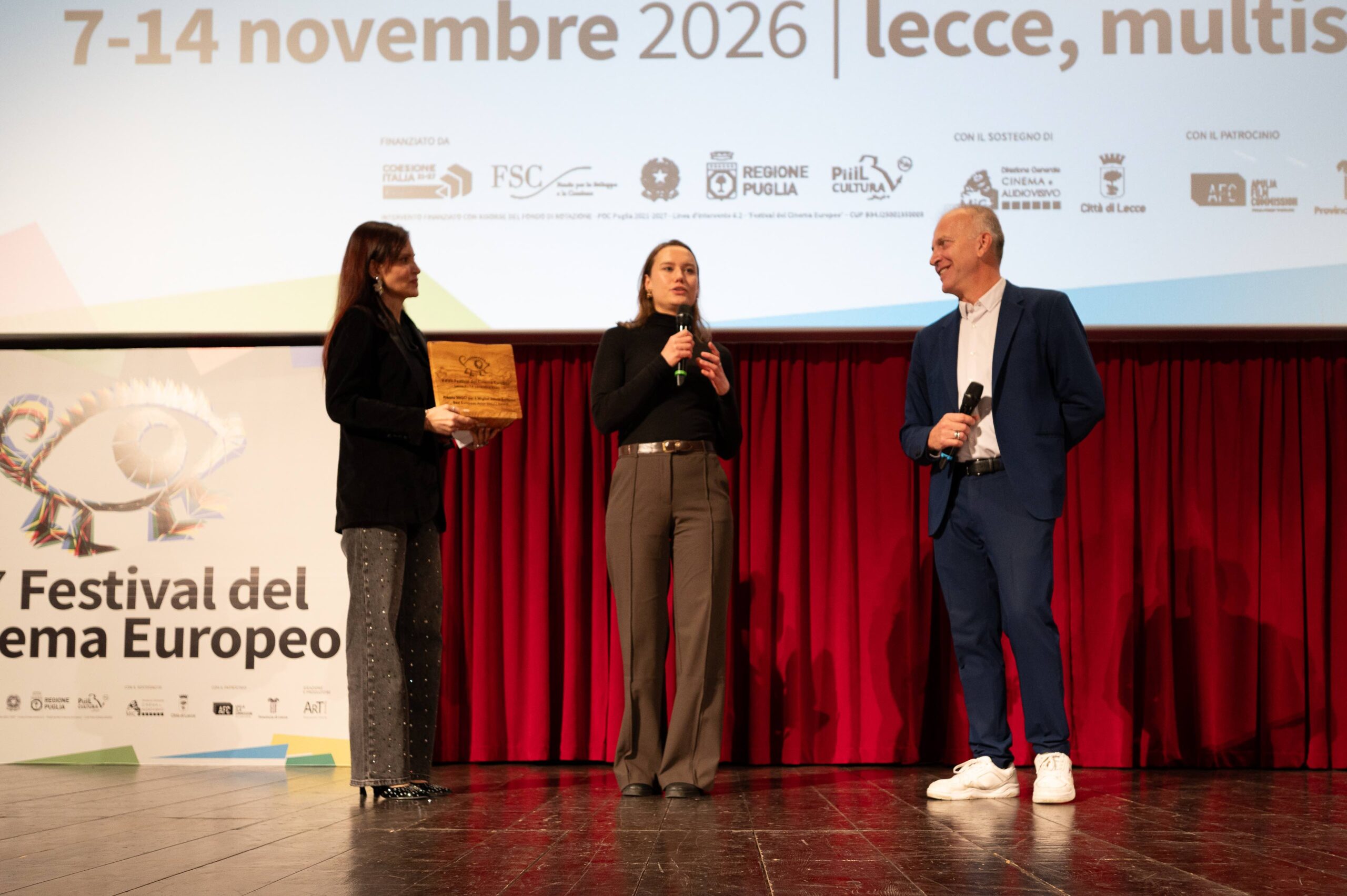
SNGCI Award for Best European Actress
Zygimante Elena Jakstaite
for the film
How to Divorce During the War
by Andrius Blaževičius
––––––––––––––––––––––––––––––
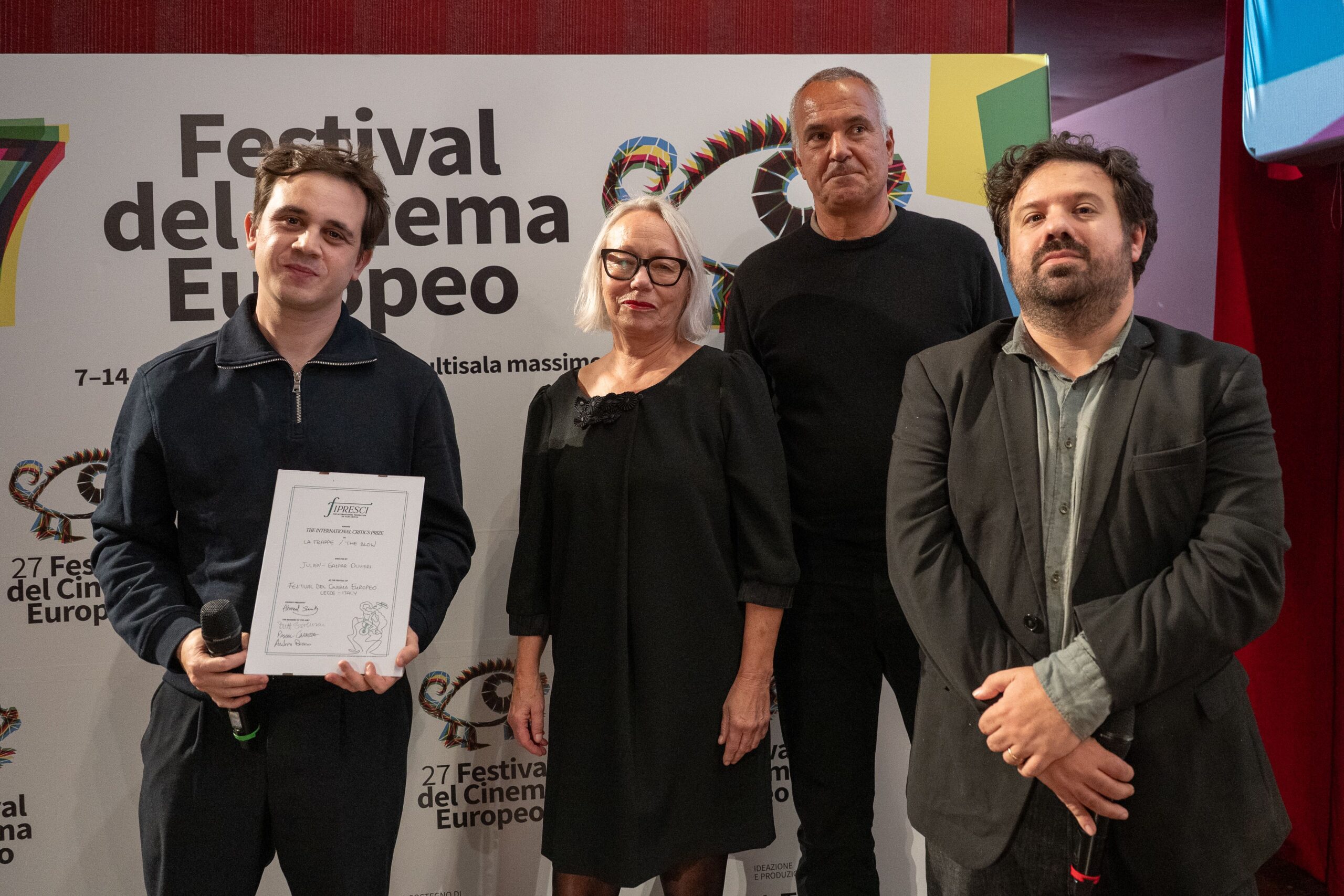
FIPRESCI Award
The Blow
by Julien Gaspar-Oliveri
––––––––––––––––––––––––––––––
SNCCI Critics’ Award
The Boatman
by Simão Cayatte
Special Mention (ex aequo)
The Lost Son by Darko Štante
and
The Fatigued by Yura Dunay
––––––––––––––––––––––––––––––
Cineuropa Award
Stand Up by Mari Sanders
––––––––––––––––––––––––––––––
MEDIA Salles The Women Exhibitors' Choice Award
Stand Up by Mari Sanders
––––––––––––––––––––––––––––––
Audience Award
The Boatman by Simão Cayatte
––––––––––––––––––––––––––––––
Student Jury Prize – Classic and Music High School “Giuseppe Palmieri”
The Boatman by Simão Cayatte
––––––––––––––––––––––––––––––
––––––––––––––––––––––––––––––
“PUGLIA SHOW” SHORT FILM COMPETITION
CNC Award - National Short Film Center
and Augustus Color Award for Best Short Film
Sueña ahora
by Gabriele Licchelli, Francesco Lorusso, Andrea Settembrini
––––––––––––––––––––––––––––––
Special mention to
François, Jean et moi by Marco Bortune
––––––––––––––––––––––––––––––
Unisalento Award
François, Jean et moi by Marco Bortune
––––––––––––––––––––––––––––––
MARIO VERDONE AWARD
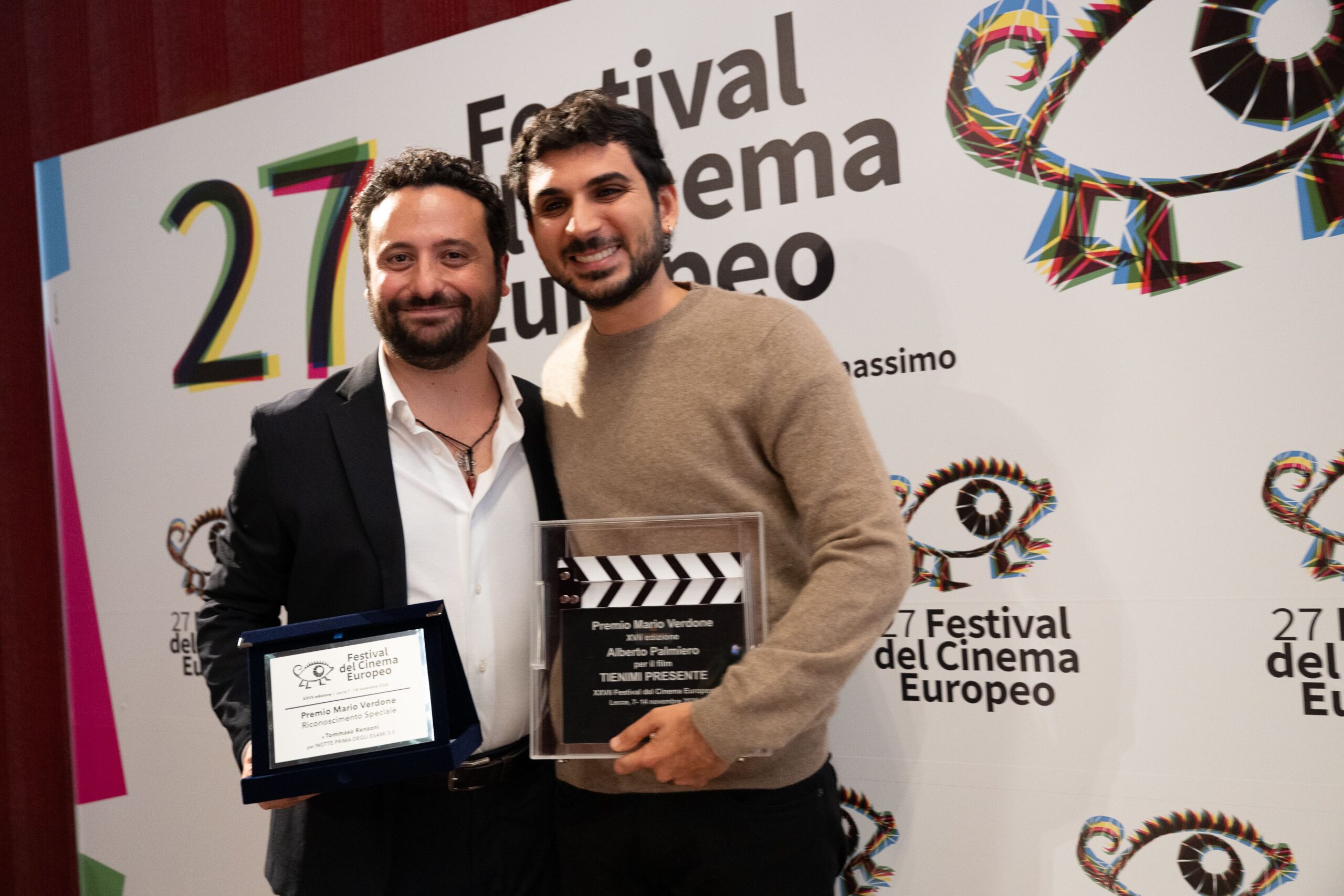
to Alberto Palmiero
for Tienimi presente
Special Recognition to
to Tommaso Renzoni
for Notte prima degli esami 3.0
––––––––––––––––––––––––––––––
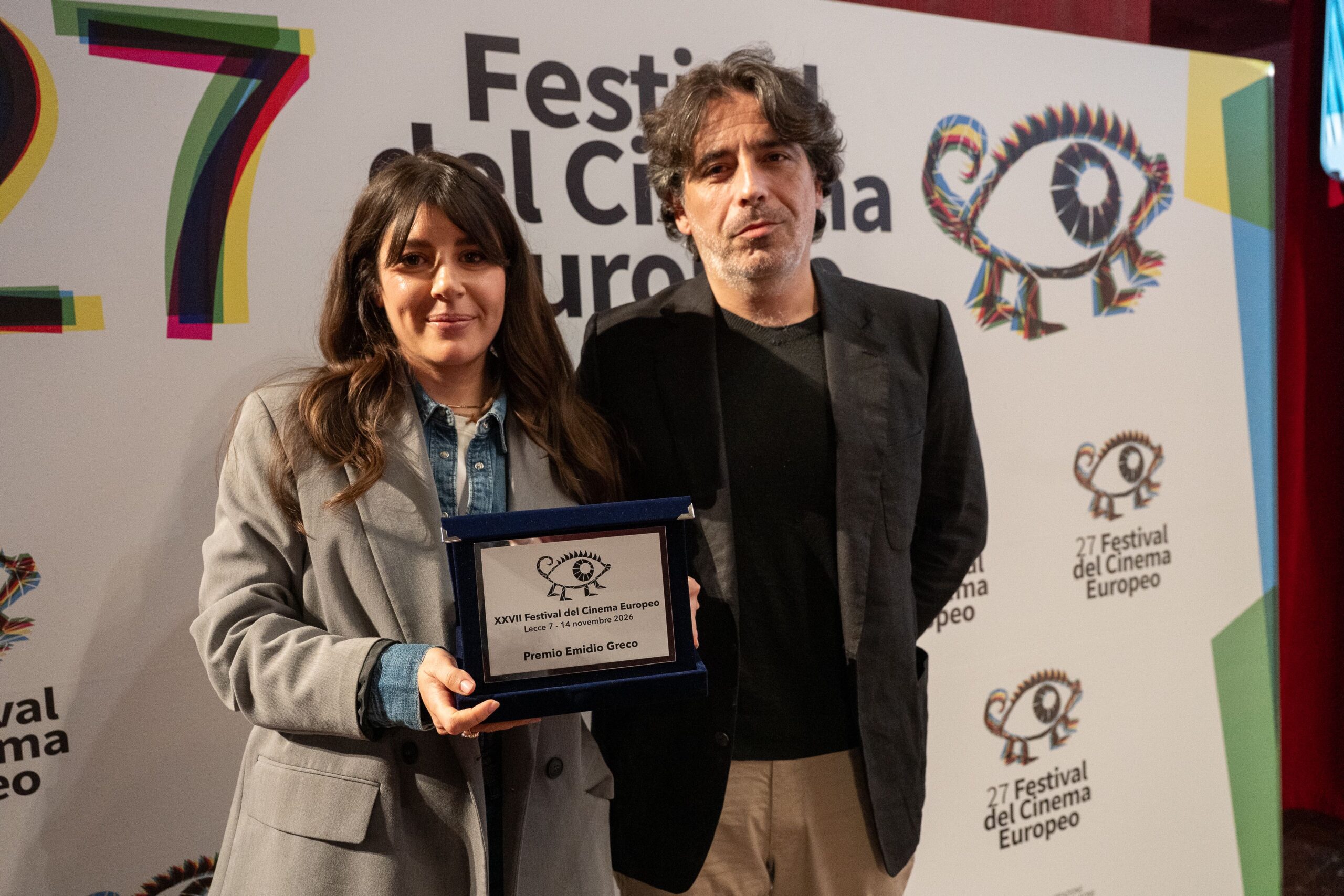
EMIDIO GRECO AWARD
Il Nemico - Lights On
by Andrej Chinappi
––––––––––––––––––––––––––––––
Cinecittà News Special Mention
for the Cinema & Reality section
Lo spazio vuoto
by Stefano Testa and Alberto Ceresoli
––––––––––––––––––––––––––––––
Rotary Club Lecce Award
L’ora di tutti by Stefania Rocca
––––––––––––––––––––––––––––––
––––––––––––––––––––––––––––––
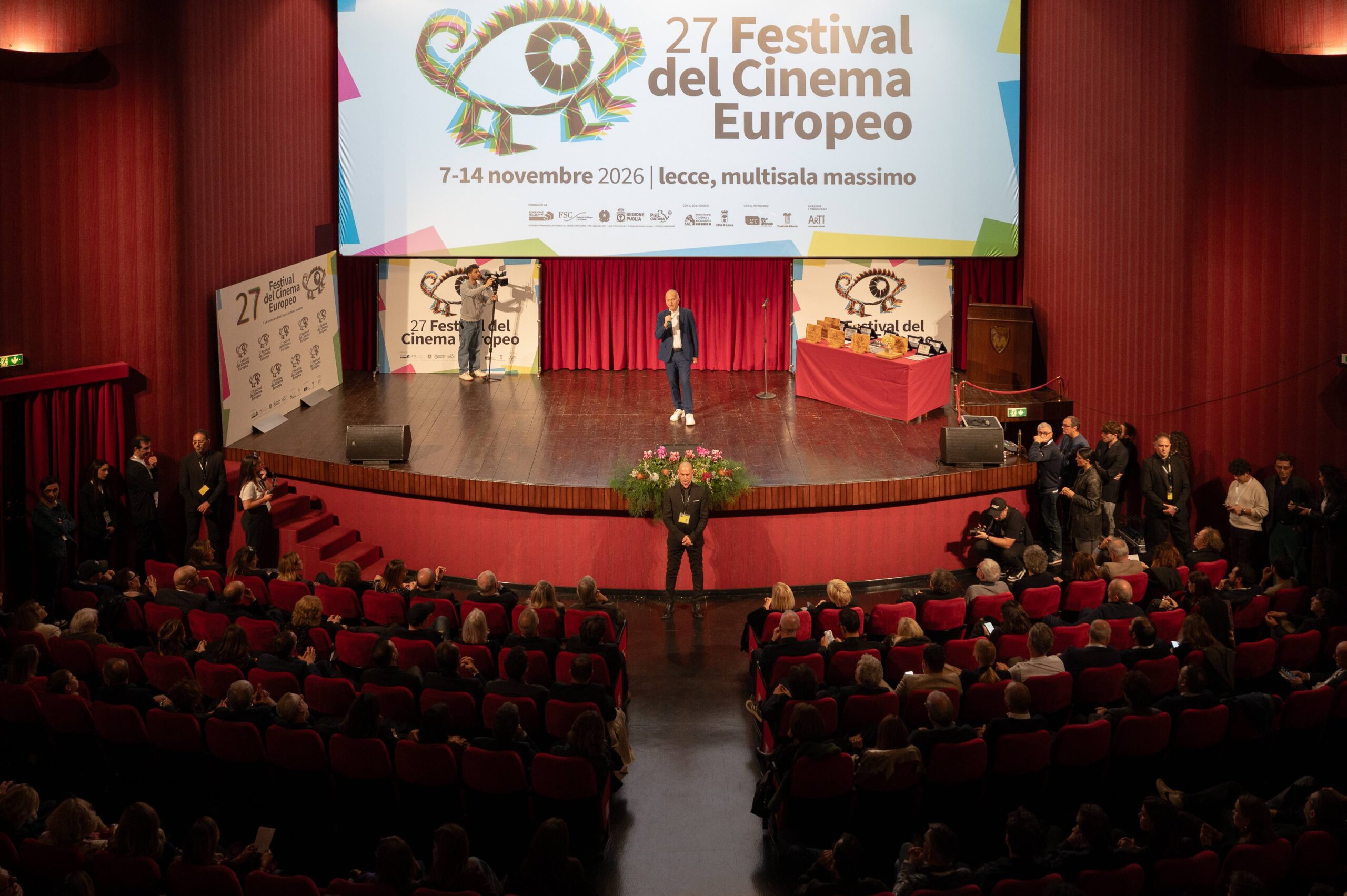
European Film Festival: 27th edition comes to an end after nine days of films, meetings and outstanding guests
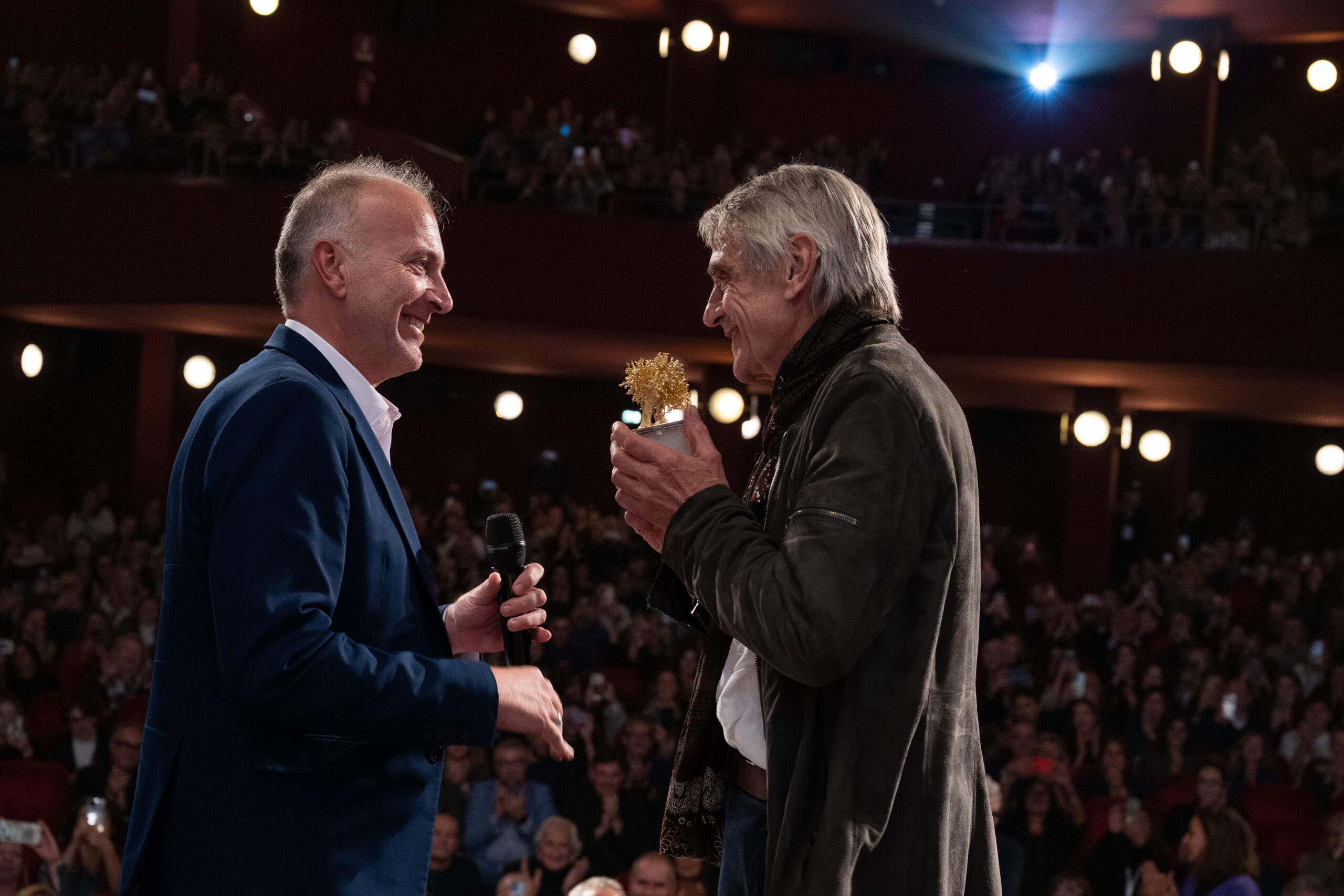
The 27th edition of the European Film Festival in Lecce, directed by Alberto La Monica, has come to a successful end. Once again, the festival transformed the city into a major meeting point for Italian and European cinema, attracting large audiences, with every evening screening sold out. Among the many distinguished guests attending this year's festival were Jeremy Irons, Enzo d’Alò, Luigi Lo Cascio, Stefania Rocca, along with Carlo and Luca Verdone, who were present for the tribute dedicated to their father, Mario Verdone. Alongside these celebrated figures, the festival welcomed directors, actors and other film industry professionals. The program ranged from the eleven films competing for the Golden Olive Tree – Cristina Soldano Award to the many works presented across the Festival's various sections, including Cinema & Reality, the Puglia Show, the Emidio Greco short film competitions, and the new Apulia Screening section. The latter showcased preview screenings of works filmed in Puglia and/or supported by the Apulia Film Commission, as well as projects that had participated in the Apulia Film Forum, highlighting the richness and diversity of contemporary filmmaking.
“We are very pleased with the results of this year's edition, which has reaffirmed the strong bond between the European Film Festival and its audience, thanks also to the significant attendance at meetings with directors and leading figures from the world of cinema,” stated Alberto La Monica, Festival Director. The presence of outstanding personalities such as Jeremy Irons, Luigi Lo Cascio and Enzo d’Alò has been particularly valuable to the festival, giving audiences the opportunity to meet artists who, through different careers and artistic languages, have left their mark on international, Italian and animated cinema. Equally meaningful was Carlo Verdone's return to Lecce after several years, accompanied by his brother Luca, for the tribute to their father, Mario. It was a moment of great emotional and cultural significance, renewing the bond between the Festival and a figure who played a fundamental role in the history and criticism of Italian cinema. This year, once again, we sought to create a program that brought together major figures, outstanding films and new voices, while keeping European cinema and its ability to portray the present through different perspectives and sensibilities at its heart. With the new Apulia Screening section, we have also strengthened our focus on audiovisual production connected with Puglia, highlighting the work of those contributing to the growth of the local sector. Our aim remains to make the festival a place for
encounters, discovery and exchange, where cinema can continue to be a source of culture, dialogue and shared experience.”
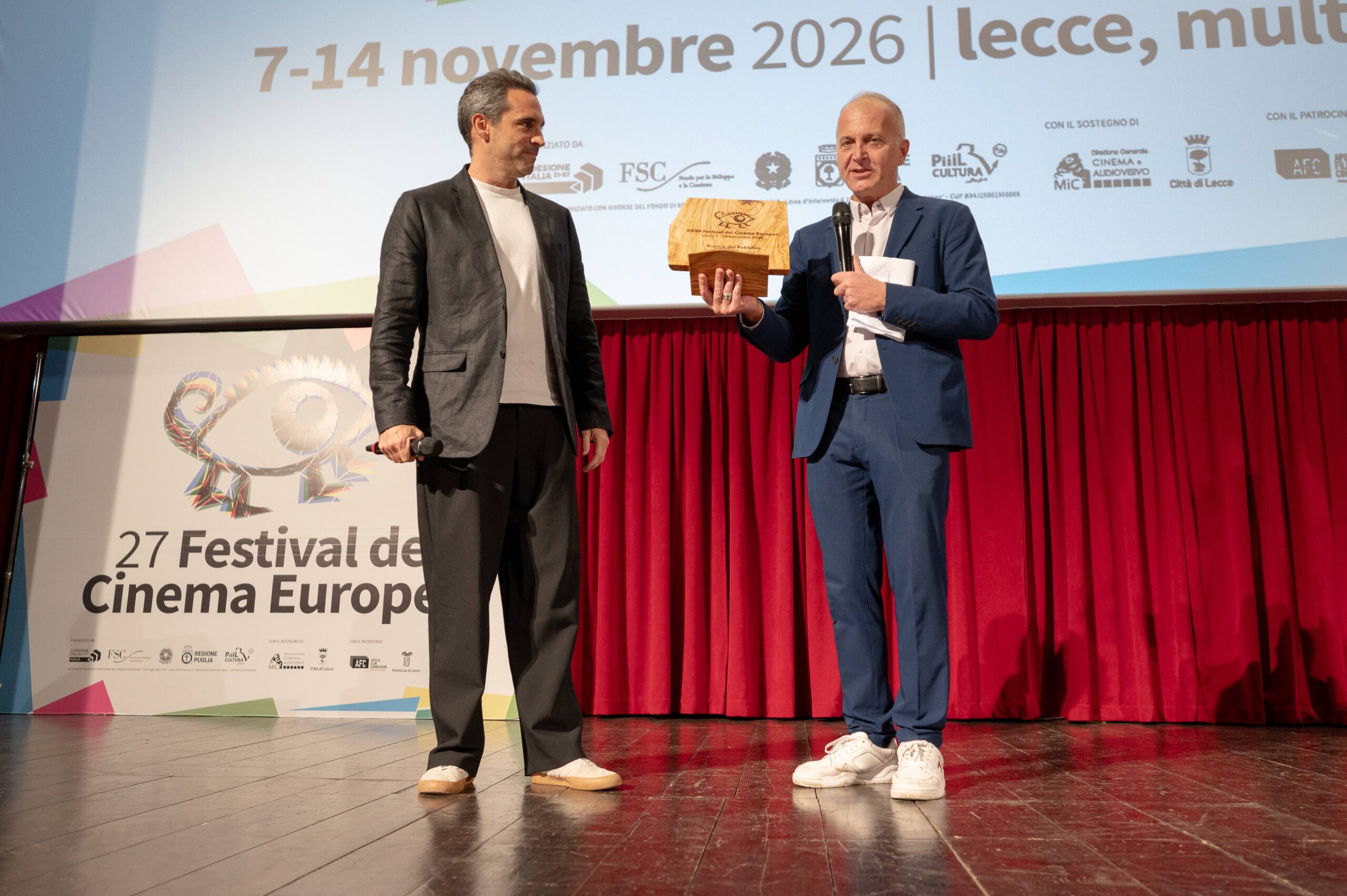
The Golden Olive Tree Award for Best Film, as well as the Lifetime Achievement Awards, are crafted by Michele Amato of Mikama Gioielli. An artisan from Molfetta, Amato creates each piece by hand, ensuring that every ‘olive tree’ sculpture possesses a unique and ever-changing form. In the spirit of sustainability, the Festival supports the concerns raised by master artisans from Salento, brought together in the CLETUS network, over the loss of olive wood. It does so by presenting awards that carry deep artistic and cultural significance; some of these pieces are the work of master craftsman Fabrizio Mastrogiovanni, while the plaque for the Mario Verdone Award is created by Gianni De Benedittis of FuturoRemoto Gioielli.
––––––––––––––––––––––––––––––
ALL FESTIVAL AWARDS
The jury of the Feature Film Competition “Golden Olive Tree”, chaired by Frédéric Boyer and comprising Giacomo Abbruzzese, Angela Prudenzi, Miroljub Vučković and Claudia Bedogni, have presented the Golden Olive Tree – Cristina Soldano Award for Best Film, the Special Jury Award, the Best Cinematography Award and the Best Screenplay Award. Other awards presented among the films in competition included the SNGCI Award for Best European Actress/Actor, the FIPRESCI Award, the Cineuropa Award, the SNCCI Critics’ Award, presented by a jury comprising Eusebio Ciccotti, Mariella Cruciani and Antonio Quaranta, the Audience Award, decided through votes cast by festivalgoers, and the Student Jury Prize, awarded by students from the “Giuseppe Palmieri” Classical and Music High School.
The Golden Olive Tree – Cristina Soldano Award for Best Film goes to Shame and Money by Visar Morina “For its ability to explore, with restraint and realism, and with the support of outstanding performances, a deeply human story, and for the complexity with which it portrays a dramatic economic and social phenomenon, highlighting how, even in the most difficult circumstances, individual dignity must always be preserved and ‘shame must never become a luxury’.”
Special Jury Award to How to Divorce during the War by Andrius Blaževičius “For its ability to connect the intimate and historical dimensions through a light-hearted yet never superficial tone, constantly redefining the meaning of personal choices in relation to the external pressures imposed by war.”
Best Cinematography Award goes to Federica Ortu for L'estate che finì due volte by Matteo Incollu “For the rare visual sensitivity with which the frames are composed, and for the use of light and suspended atmospheres that evoke the fantastical and tormented dimension so characteristic of adolescence.”
Best Screenplay Award goes to Nicole Rüthers and Joscha Bongard for Babystar by Joscha Bongard “For its sharp and precise writing, which explores the psychological consequences of media overexposure on social media, as well as the increasingly widespread phenomenon of control through which adolescents are manipulated.”
The SNGCI Award for Best European Actress/Actor, presented by the Executive Board jury of the Italian National Syndicate of Film Journalists, chaired by Laura Delli Colli, goes to Žygimantė Elena Jakštaitė for her performance in How to Divorce During the War, directed by Andrius Blaževičius. “Portraying a successful woman who unexpectedly decides to tell her husband that she wants a divorce, she gives her character, Marija, a rich spectrum of nuances, combining irony with the understandable bewilderment of a woman facing the end of her marriage on the eve of the imminent Russian invasion of Ukraine. Her performance is outstanding. In a film that has won acclaim at the Sundance Film Festival and has since been selected by Lithuania as its candidate for the Academy Awards®, she delivers a remarkable acting performance.”
The FIPRESCI (International Federation of Film Critics) Award, decided by a jury consisting of Andrea Bosco, Pascal Corazza, and Britt Sørensen, goes to The Blow by Julien Gaspar-Oliveri (France): “Making a film about a difficult subject is a challenge, and adopting an authentic cinematic language is an even greater one. The winner of the FIPRESCI Award succeeds on both counts. It is a work that is simultaneously courageous, raw, vibrant, and heart-wrenching. It tackles its subject without compromise, telling its story with a sensibility that is both edgy and tender, allowing the viewer to share in the struggles, crises, and mutual support of the protagonists. The Italian translation of the title is ‘Il colpo’ – and that is precisely what the film has dealt us.”
The SNCCI (National Union of Italian Film Critics) Critics' Award—decided by a jury composed of Eusebio Ciccotti, Mariella Cruciani, and Antonio Quaranta—goes to The Boatman by Simão Cayatte, “for telling a personal and social story through an understated approach, creating a powerful symbol of contemporary society. A particular recognition goes to Romeu Runa, who plays the protagonist Joaquin, for his ability to ‘act without acting.’”
A special mention (ex aequo) is awarded to The Lost Son by Darko Štante and The Fatigued by Yura Dunay, “for a multi-layered screenplay that allows for a profound psychological exploration of the characters.”
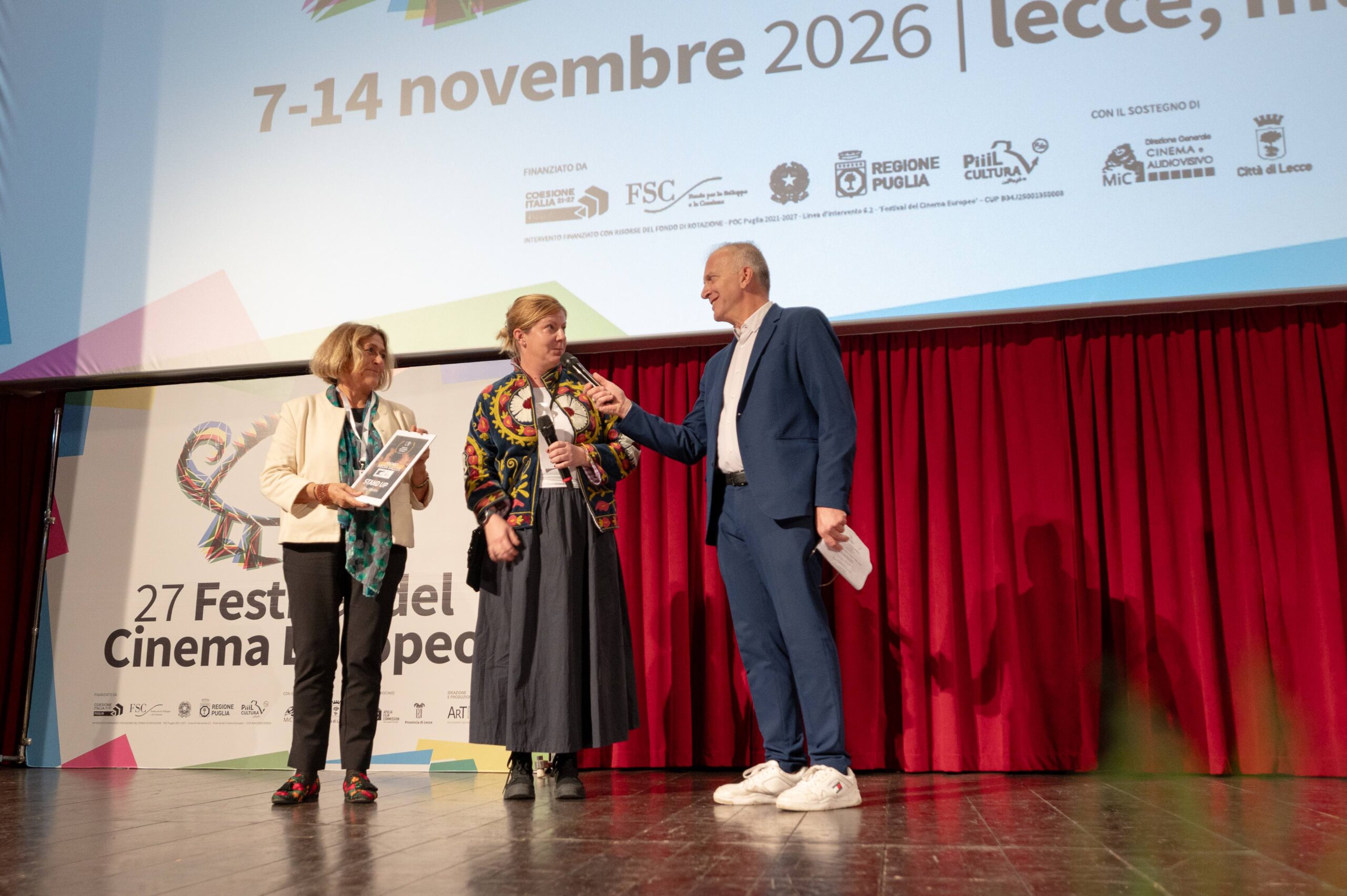
The Cineuropa Award, presented by Camillo De Marco, goes to Stand Up by Mari Sanders, with the following jury statement: “In cinema, we have often encountered the representation of people with disabilities, usually portrayed in compassionate terms. Stand Up succeeds in moving beyond stereotypes, sentimentality, and self-pity. The director reminds us that the issue is not disability itself, but rather one’s position within society. With subtle humor and sensitivity coupled with excellent direction of the main cast, the film shows us how sexuality can be experienced on different levels, inviting us to view disability as a cultural model, from the perspective of emancipation.”
The jury of women cinema exhibitors for “The Women Exhibitors' Choice”, a MEDIA Salles project coordinated by Tina Bianchi, comprising Maria Castellano of Metropolis Multicine in Mola di Bari and Casablanca Multicine in San Giorgio Ionico, Montse Guiu March of Cinemes Guiu in La Seu d’Urgell (Spain), and Tímea Kókai-Nagy of Cine-Mis Art-Mozi/Cinefest in Miskolc (Hungary), has chosen to award Stand Up by Mari Sanders. The jury stated: “Thanks to its extraordinary ability to combine incisive direction and a profound authentic perspective with a powerful communicative intensity—one capable of engaging the audience and prompting reflection—Stand Up gives voice to a journey of resistance and emancipation, in which a feminine sensibility becomes a universal lens through which to interpret our present. It is a vital work that perfectly embodies the mission of European film distribution: to bring courageous stories to the big screen—stories that spark empathy, debate, and participation.”
The Audience Award goes to The Boatman by Simão Cayatte.
The Student Jury Prize, awarded by students from the "Giuseppe Palmieri" Classical and Music High School, goes to The Boatman by Simão Cayatte, with the following citation: “A work of rare expressive power that elevates cinema to a tool for profound inquiry. The director guides the viewer through complex themes with impeccable technical mastery and a distinctive personal style. The extraordinary psychological exploration brings to life characters of absolute authenticity—anchored by a protagonist whose complexity and nuance are truly memorable—all enhanced by masterful cinematography that etches every frame into one’s memory.”
For the Puglia Show section, the jury—chaired by Pino Calabrese and including Alessandro Giorgio and Alessandro Loprieno—has awarded the CNC Prize and the Augustus Color Prize to the best short film in competition to Sueña ahora by Gabriele Licchelli, Francesco Lorusso, and Andrea Settembrini, “for its ability to articulate the social and allegorical meanings of vision, of light and shadow, of darkness and illumination. The boundaries between fiction and non-fiction cinema dissolve, and the very possibility of seeing becomes an existential element, conveyed through a minimalist, elegant and unpretentious approach.”
Special Mention goes to François, Jean et moi by Marco Bortune, “for its ability to showcase the actors and integrate them organically into a light-hearted visual structure, using an entertaining cinematic language that is capable of balancing extremely different visual worlds, both classical and contemporary.”
The Unisalento Award, presented by a jury of university students to a short film from the Puglia Show selection, was awarded to François, Jean et moi by Marco Bortune. The jury’s rationale states: “The short film demonstrates a remarkable mastery of different genres and narrative registers, which coexist within a coherent structure. The inclusion of a 3D-graphic sequence with a video-game aesthetic deliberately disrupts the realistic fabric of the story, creating a formal ‘short circuit’ that hybridizes cinematic language with that of video games, all without compromising emotional continuity. The cinematography amplifies the characters’ emotional dimension, fostering a rapid and organic sense of identification for the viewer. The editing—tight and rhythmically precise—supports the narrative without any pauses, maintaining constant tension and engagement.”
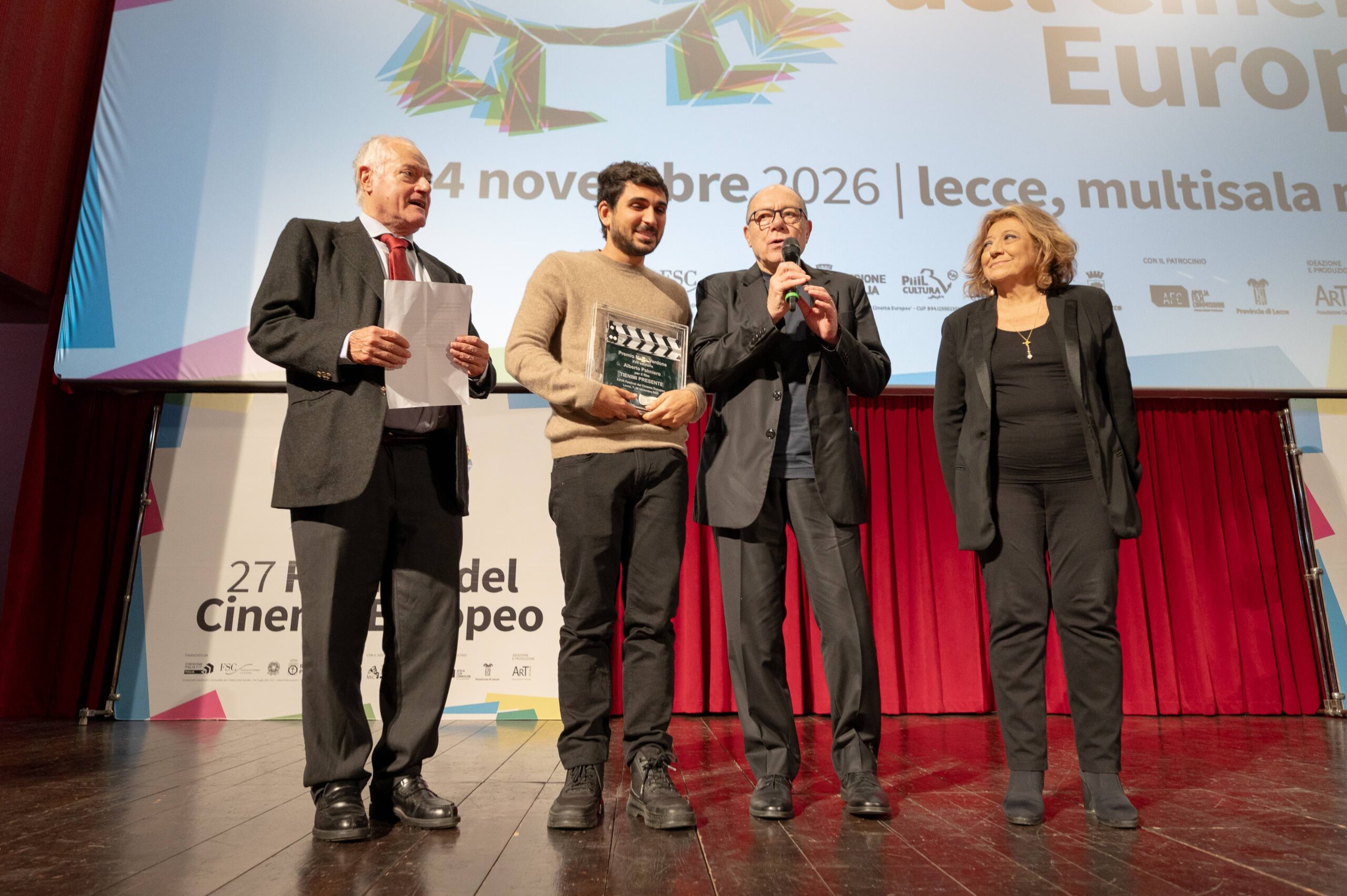
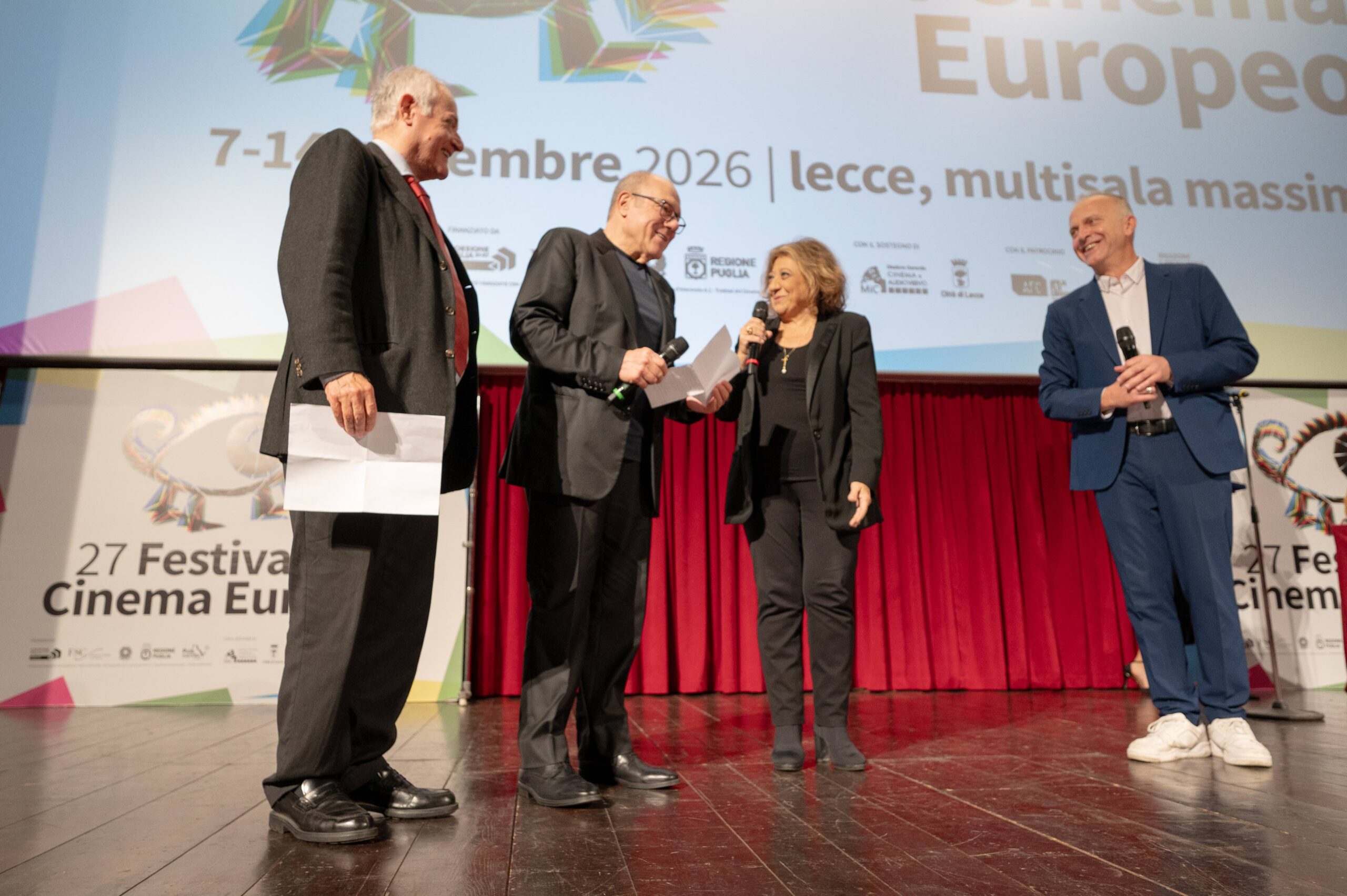
The 17th edition of the Mario Verdone Award, presented by a jury consisting of siblings Carlo, Luca, and Silvia Verdone, goes to Alberto Palmiero for Tienimi presente. The jury’s statement is as follows: “In the sincere and disillusioned portrait that is Tienimi presente, Alberto Palmiero delivers a debut film that, with a healthy dose of self-deprecating humor, captures not only his own fears but also the existential turmoil of a generation that acutely feels the difficulty of finding a place in a hostile, closed-off world. A world that offers young people few opportunities and even fewer reasons for hope. Dreaming of a career in cinema—and, in particular, pinning his hopes on a producer who offers nothing but empty promises—Palmiero (who, with a nod to Nanni Moretti, also stars in his own film) employs a minimalist narrative style to reveal a perspective that is disenchanted, yet endearingly sincere.”
A Special Recognition goes to Tommaso Renzoni for Notte prima degli esami 3.0 “for his ability to depict the vulnerabilities and aspirations of a generation with authenticity and freshness, while courageously taking on the challenge of a debut feature within the complex genre of comedy. Tackling Notte prima degli esami—a film that has become something of a cult classic in recent years—required engaging with a cultural touchstone deeply embedded in the collective memory. Tommaso Renzoni rises to this challenge successfully, crafting a story that is both generation-specific and universal, while demonstrating a remarkable talent for directing and bringing out the best in a diverse cast including both newcomers and experienced actors.”
For the 14th edition of the Emidio Greco Award, the finalists were selected by the National Short Film Center, while the jury—comprising members of the Greco family—awarded the prize to Il Nemico - Lights On by Andrej Chinappi. The jury noted: “The film’s strengths—which underpin this winning short—include its exploration of a compelling contemporary theme—the recognition of ‘the other’ within the friend–enemy dichotomy, its ability to elevate this theme into a narrative that is only seemingly a story about children's games, and a sophisticated command of mise-en-scène. Furthermore, the film features superb direction of the young actors, a mature and thoughtful script, and a well-balanced narrative rhythm that makes the film thoroughly engaging right through to the end.”
The Cinecittà News Special Mention for the "Cinema & Reality" section—awarded by Cinecittà News director Cristiana Paternò, along with Andrea Guglielmino and Nicole Bianchi—goes to Lo spazio vuoto by Stefano Testa and Alberto Ceresoli, "for having recounted, with restraint, sensitivity, and tenacity, the story of Luisa—who died by suicide at the age of 19, after giving birth to her second child—and, consequently, the life of Alberto. The Empty Space by Stefano Testa and Alberto Ceresoli does not seek explanations or offer judgments; instead, it gathers the traces of an interrupted life, allowing the face of a mother to emerge, along with the invisible yet enduring umbilical cord connecting her to a son who continues to search for her. The Cinecittà News editorial team’s award goes to a film in which memory becomes the only place where an otherwise impossible encounter can finally take place."
The Rotary Club Lecce Award goes to L’ora di tutti by Stefania Rocca for “the profound human, civic, and cultural value of its narrative, and for its ability to transform a poignant chapter in the history of Otranto into a universal story of extraordinary contemporary relevance. The film gives a voice to women through the character of Idrusa and depicts war with an expressiveness devoid of any rhetoric. Using a bold cinematic language, it addresses themes deeply aligned with the Rotary’s core values—such as freedom, human dignity, and respect for others—reminding us that every individual has their own ‘hour’: a moment when they are called upon to take responsibility for their choices and to contribute, with courage and solidarity, to building a society that is more just, free, and fraternal. It achieves this through a personal vision, where historical memory evolves into a form of consciousness—creating an opportunity for us to reflect upon our own present.”
The European Film Festival, conceived and produced by the Cultural Association “Art Promotion,” is supported by resources from the 2021–2027 Revolving Fund under Action Line 6.2, “Enhancement and Promotion of Culture, Creativity and Talent,” under the public call for proposals aimed at supporting festivals, film series, and award projects in the cinematographic and audiovisual sector of regional, national, and international significance to be held in the Puglia region during the three-year period of 2025–2027 through the Culture Economy Division of the Puglia Region. The Festival also receives support from the Ministry of Culture – Directorate General for Cinema and the City of Lecce.
The European Film Festival, recognized by the Ministry of Culture as an “event of national interest,” is a member of the Italian Film Festivals Association (AFIC) and enjoys the patronage of the Apulia Film Commission, the Province of Lecce and the University of Salento, as well as the collaboration of the Centro Sperimentale di Cinematografia, S.N.G.C.I., FIPRESCI, S.N.C.C.I., and the Italian Short Film Center.
Media partners: Rai Radio3, Cinecittà News, Cineuropa, FRED Film Radio
Partners: Acqua Orsini, Agricole Vallone, Augustus Color, Futuro Remoto Gioielli, Liberrima, Quarta Caffè, Rotary Club Lecce
organization:
Cultural Association “Art Promotion”
















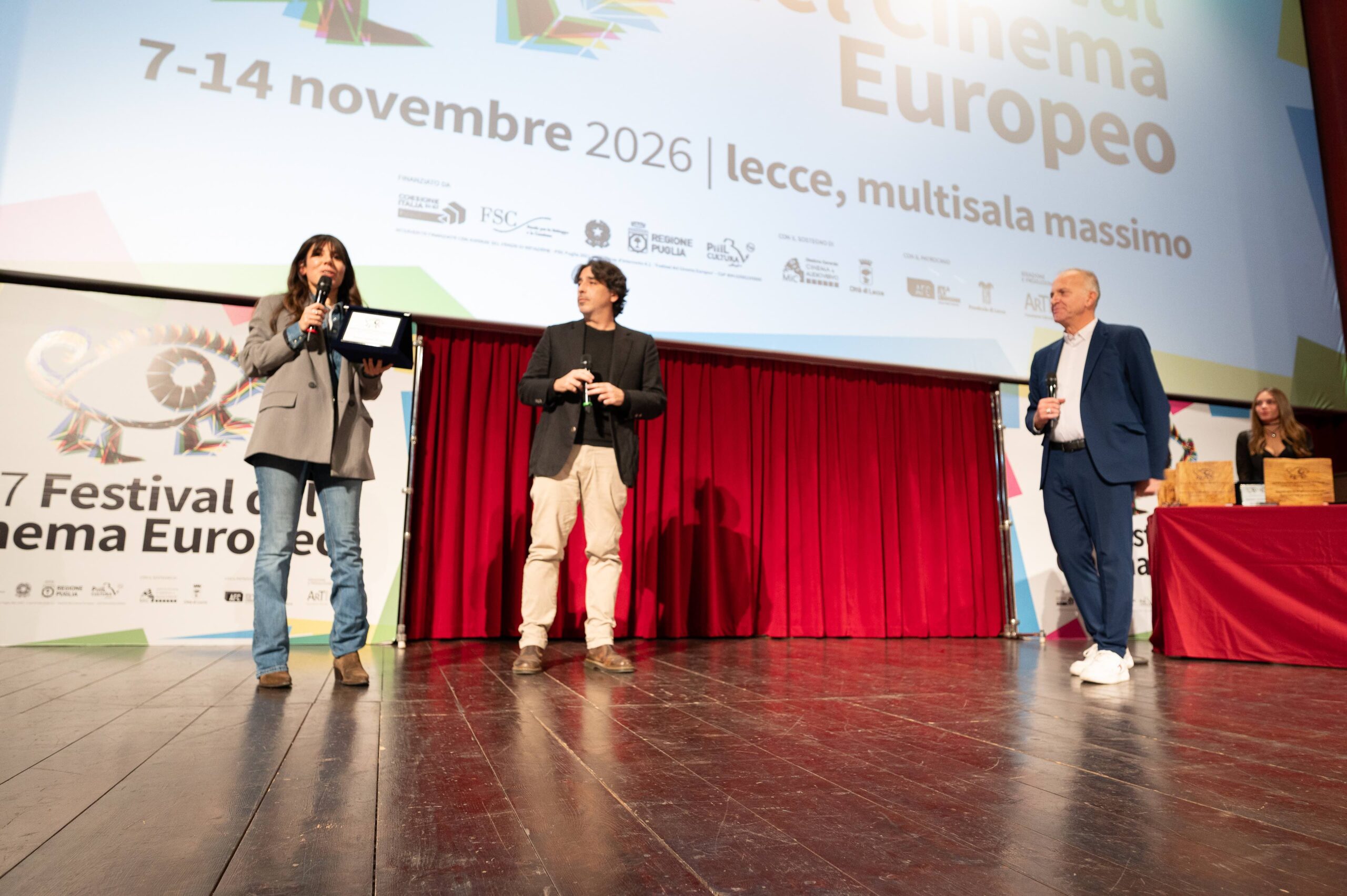


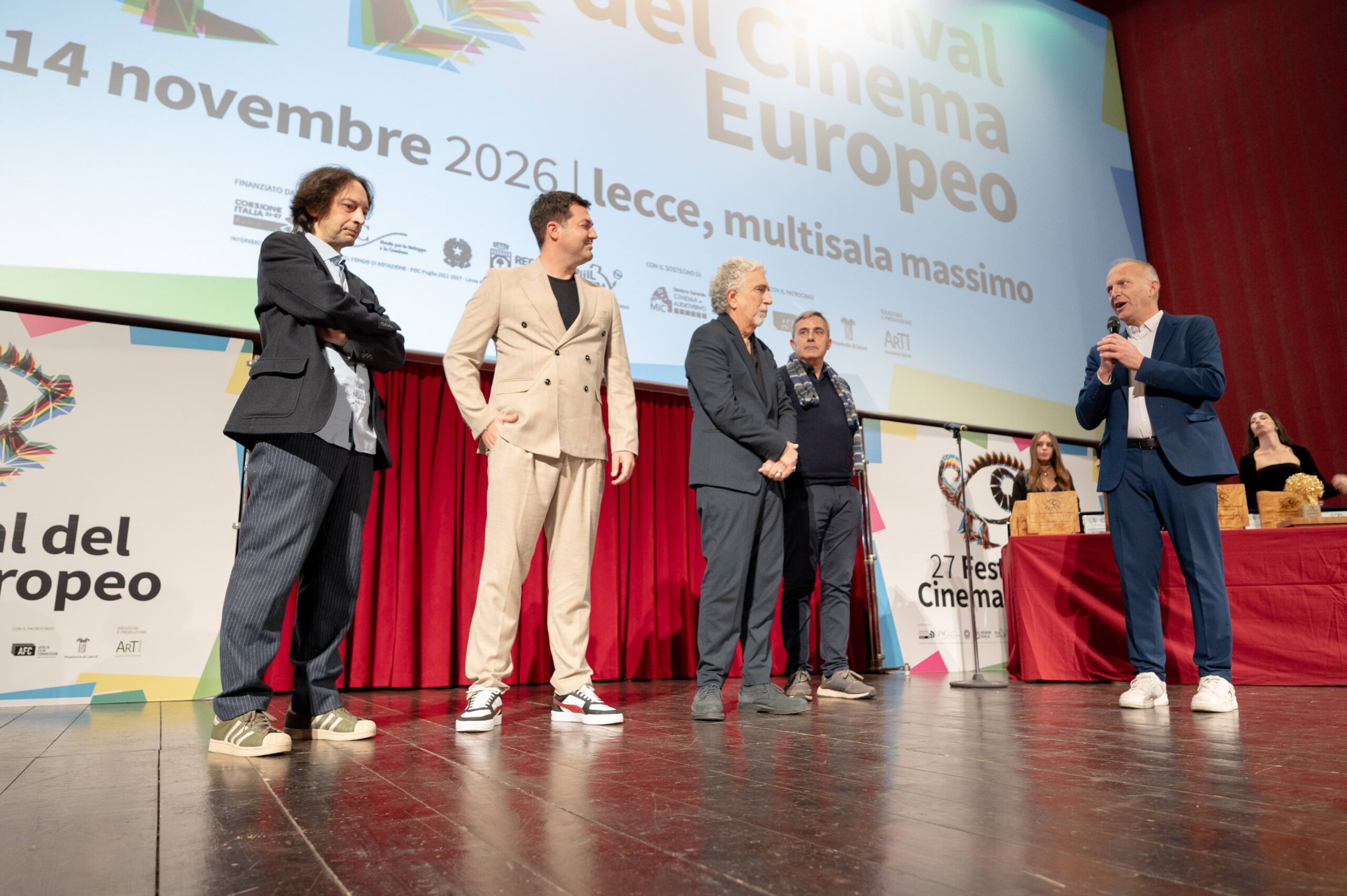
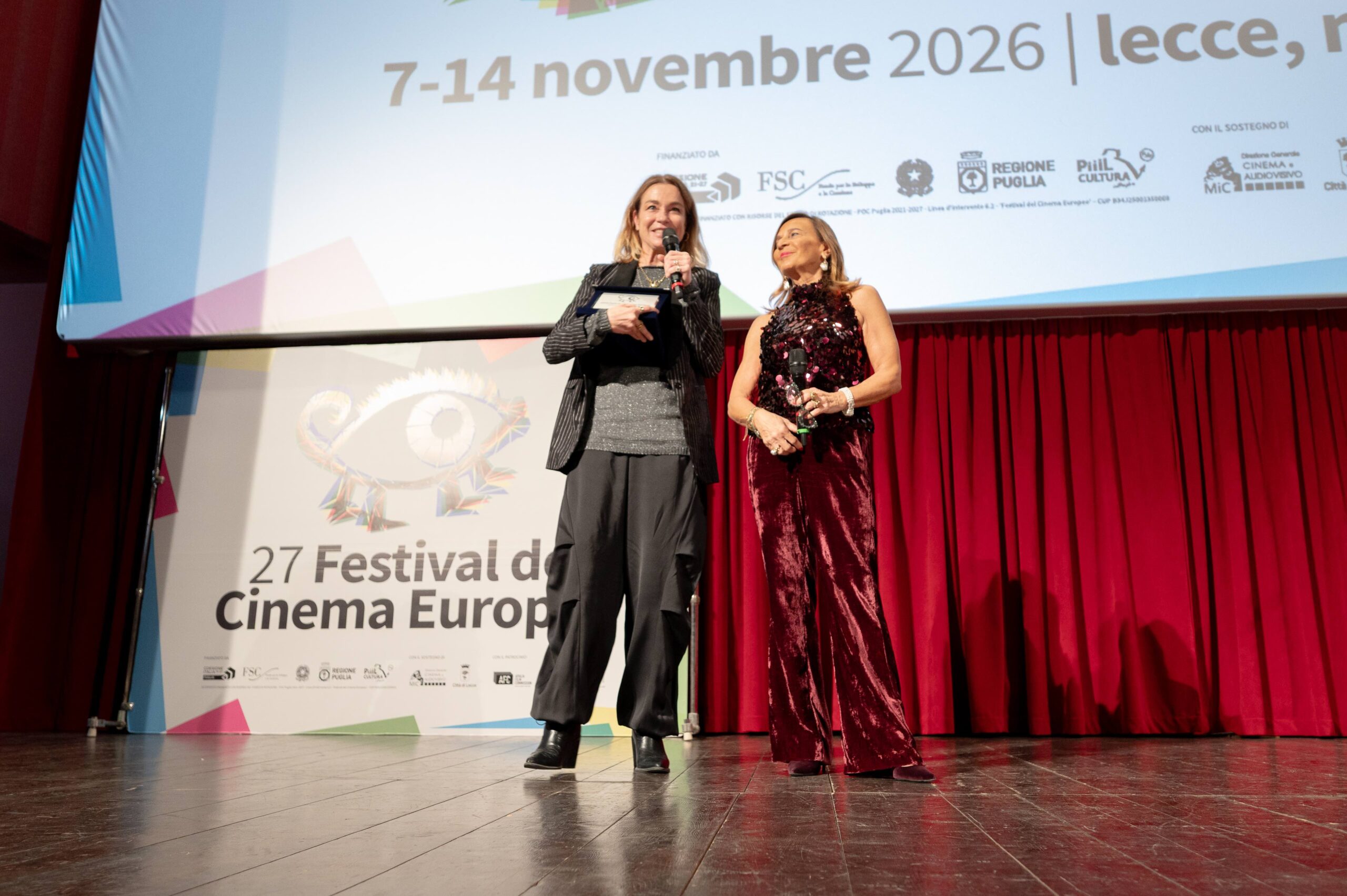
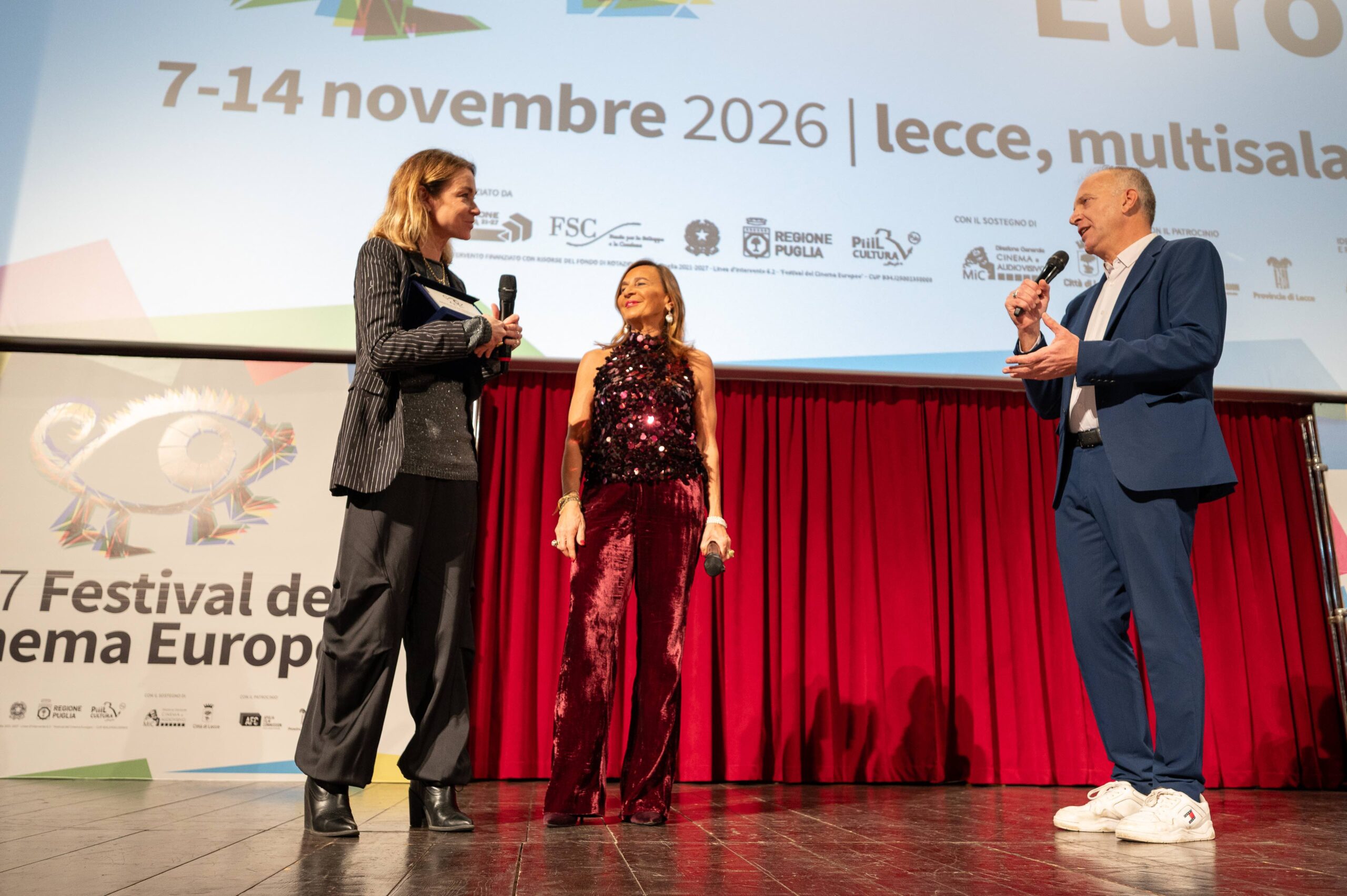

TUTTI I PREMI DEL FESTIVAL
La Giuria del Concorso Lungometraggi “Ulivo d’Oro”, presieduta da Frèdèric Boyer e composta da Giacomo Abbruzzese, Angela Prudenzi, Miroljub Vukovi e Claudia Bedogni ha assegnato l’Ulivo d’Oro “Premio Cristina Soldano al Miglior Film”, il Premio Speciale della Giuria, il Premio per la Migliore Fotografia e il Premio per la Migliore Sceneggiatura. Sempre tra i film del Concorso vengono assegnati: Premio SNGCI miglior attrice/attore Europeo - Premio Fipresci - Premio Cineuropa - Premio della Critica del SNCCI attribuito dalla Giuria composta da Eusebio Ciccotti, Mariella Cruciani, Antonio Quaranta; il Premio del Pubblico attribuito tramite votazione dagli spettatori del Festival.
L’Ulivo d’Oro - Premio Cristina Soldano al Miglior Film va a Shame and Money di Visar Morina “per l’abilità nell’esplorare con sobrietà e concretezza, anche grazie a interpretazioni superbe, una storia profondamente umana e per la complessità nel descrivere un drammatico fenomeno economico e sociale evidenziando come, anche nelle situazioni più difficili, la dignità dei singoli debba sempre essere preservata e la “vergogna non diventare un lusso”.
Premio Speciale della Giuria a How to Divorce during the War di Andrius Blaževičius “per la capacità di correlare con toni leggeri, ma non per questo superficiali, la dimensione intima e quella storica ridefinendo costantemente il significato delle scelte personali sulla base dei condizionamenti esterni indotti dalla guerra”.
Premio per la Migliore Fotografia va a L'estate che finì due volte di Matteo Incollu “per la rara sensibilità visiva con cui sono costruite le inquadrature e per i lavoro sulla luce e le atmosfere sospese evocative della dimensione fantastica e tormentata tipica dell‘adolescenza”.
Premio per la Migliore Sceneggiatura va a Baby Star di Joscha Bongard “per la scrittura acuta e puntuale con cui si esplorano le conseguenze psicologiche della sovraesposizione mediatica legata ai social e il fenomeno del controllo sempre più diffuso con cui vengono manipolati gli adolescenti”.
Premio SNGCI miglior attrice/attore Europeo assegnato dalla Giuria del Sindacato Giornalisti Cinematografici Italiani, presieduta da Laura Delli Colli, va a Zygimante Elena Jakstaite per il film How to Divorce During the War di Andrius Blaževičius “interpretando una donna di successo che sceglie inaspettatamente di comunicare al marito la sua intenzione di divorziare, regala alla sua Marija un ventaglio di sfumature ricche di ironia ma anche di comprensibile smarrimento di fronte alla fine di un matrimonio proprio alla vigilia dell'invasione russa dell'Ucraina imminente. Un’ottima interpretazione, la sua -in un film che ha conquistato il Sundance Film Festival ed è ora candidato dalla Lituania a concorrere per l’Oscar®-è una notevole prova d’attrice”.
Premio Fipresci (Federazione Internazionale della Stampa Cinematografica), attribuito dalla giuria composta da Andrea Bosco, Pascal Corazza, Britt Sørensen, va a The Blow di Julien Gaspar-Oliveri, Francia: “Realizzare un film su un tema difficile è una sfida, e adottare un linguaggio cinematografico autentico lo è ancora di più. Il vincitore del Premio FIPRESCI riesce a fare entrambe le cose. È un’opera al tempo stesso coraggiosa, cruda, vibrante e straziante. Affronta la sua tematica senza scendere a compromessi, raccontando la sua storia con una sensibilità nervosa ma tenera che permette allo spettatore di condividere le lotte, le crisi e il sostegno reciproco dei protagonisti. La traduzione italiana del titolo è "Il colpo", ed è proprio ciò che ci ha sferrato”.
Premio della Critica del SNCCI Sindacato Nazionale Critici Cinematografici Italiani attribuito dalla Giuria composta da Eusebio Ciccotti, Mariella Cruciani, Antonio Quaranta va a The Boatman di Simão Cayatte “per aver raccontato una storia personale e sociale in sottrazione, fortemente simbolica della società contemporanea. Si segnala l'interpretazione di Romeu Runa, il protagonista Joaquin, per la sua capacità di "recitare senza recitare”.
Menzione speciale ex aequo The Lost Son di Darko Štante e The Fatigued di Yura Dunay “per la scrittura stratificata della sceneggiatura dalla quale emerge lo scavo psicologico dei personaggi”.
Premio Cineuropa, assegnato da Camillo De Marco, va a Stand Up di Mari Sanders con la seguente motivazione: “Nel cinema ci siamo imbattuti spesso nella rappresentazione delle persone con disabilità, con toni perlopiù compassionevoli. Stand Up riesce a superare stereotipi, sentimentalismo e autocommiserazione. Il regista ci dice che il problema non è la disabilità in sé ma la posizione all'interno della società. Con sottile umorismo e sensibilità - e con una grande direzione dei protagonisti - ci mostra come si possa vivere la sessualità su piani diversi, ci invita a guardare alla disabilità come modello culturale, nell'ottica dell'emancipazione”.
La giuria di donne esercenti di MEDIA Salles, a cura di Tina Bianchi, Maria Castellano del Metropolis Multicine di Mola di Bari e del Casablanca Multicine di San Giorgio Ionico, Montse Guiu March dei Cinemes Guiu di La Seu d’Urgell (Spagna), Tímea Kókai-Nagy del Cine-Mis Art-Mozi/Cinefest di Miskolc (Ungheria) ha scelto di premiare Stand Up di Mari Sanders: “Grazie alla sua straordinaria capacità di coniugare una regia incisiva e una prospettiva profondamente autentica con una potente intensità comunicativa – capace di coinvolgere il pubblico e di stimolarlo alla riflessione – "Stand Up" dà voce a un percorso di resistenza ed emancipazione, in cui la sensibilità femminile diventa una lente universale attraverso cui interpretare il nostro presente. È un'opera vitale che incarna perfettamente la missione della distribuzione cinematografica europea: portare sul grande schermo storie coraggiose, storie che suscitano empatia, dibattito e partecipazione”.
Il Premio del Pubblico va a The Boatman di Simão Cayatte.
Per la sezione Puglia Show, la giuria, presieduta da Pino Calabrese e composta da Alessandro Giorgio e Alessandro Loprieno, assegna il Premio CNC ed il Premio Augustus Color al miglior cortometraggio in concorso, Sueña ahora di Gabriele Licchelli, Francesco Lorusso, Andrea Settembrini “per la sua capacità di declinare i significati sociali e allegorici della visione, del chiaro e dello scuro, del buio e della luce. I confini tra finzione e cinema del reale si perdono e la possibilità di guardare diventa elemento esistenziale attraverso un tratto minimalista, elegante e senza retorica”.
Menzione speciale a François, Jean et moi di Marco Bortune “per la capacità di valorizzare gli attori e inserirli in modo organico in una struttura visiva scanzonata con un linguaggio divertente, capace di tenere in bilico immaginari visivi molto diversi, classici e contemporanei”.
Il Premio Unisalento assegna il riconoscimento ai cortometraggi di Puglia Show dalla giuria degli studenti universitari a François, Jean et moi di Marco Bortune con la motivazione: “Il cortometraggio dimostra una notevole padronanza di generi e registri narrativi differenti, che convivono in una struttura coerente. L’inserimento di una sequenza in grafica 3D dall’estetica videoludica rompe deliberatamente il tessuto realistico del racconto, creando un cortocircuito formale che ibrida il linguaggio cinematografico con quello del videogioco senza compromettere la continuità emotiva. La fotografia amplifica la dimensione emotiva dei personaggi, favorendo un’immedesimazione rapida e organica dello spettatore. Il montaggio, serrato e ritmicamente preciso, sostiene la narrazione senza tempi morti, mantenendo costante la tensione e il coinvolgimento”.
Il Premio Mario Verdone, alla sua XVII edizione, assegnato dalla giuria composta dai fratelli Carlo, Luca e Silvia Verdone va a Tienimi presente di Alberto Palmiero con la seguente motivazione: “Nel ritratto sincero e disilluso del suo Tienimi presente, Alberto Palmiero firma non senza una buona dose di autoironia un’opera prima che racconta non solo le sue paure ma i turbamenti esistenziali di una generazione che sente forte, ovunque, la difficoltà di trovare un posto in un mondo ostile, chiuso, che ai giovani offre poche possibilità ma anche poche speranze. Sognando il cinema e soprattutto l’incontro con un produttore dal quale colleziona solo illusioni Palmiero, anche ‘morettianamente’ protagonista del suo film, nella sua narrazione minimalista svela uno sguardo disincantato ma simpaticamente sincero”.
Riconoscimento speciale a Notte prima degli esami 3.0 di Tommaso Renzoni “per aver saputo raccontare, con autenticità e freschezza, fragilità e speranze di una generazione, affrontando con coraggio la sfida di un’opera prima in un genere complesso come la commedia. Misurarsi con ‘Notte prima degli esami’, film diventato un piccolo cult degli ultimi anni, significava confrontarsi con un immaginario profondamente radicato nella memoria collettiva. Tommaso Renzoni raccoglie questa sfida con successo, dando vita a un racconto capace di essere al contempo generazionale e universale, e dimostrando una notevole capacità di dirigere e valorizzare un cast eterogeneo, tra interpreti esordienti ed esperti”.
Per il Premio Emidio Greco, giunto alla XIV edizione, la selezione dei finalisti è a cura del Centro Nazionale del Cortometraggio e la giuria composta dalla famiglia Greco che assegna il premio a Il mio nemico di Andrej Chinappi: “La scelta di uno dei temi forti del presente - il riconoscimento “dell’altro” da sé nel binomio amico/nemico -, la capacità di sublimarlo in un racconto che, solo all’apparenza, è una storia di giochi fra bambini e la consapevolezza della messa in scena sono i tre punti fermi sui quali si regge il cortometraggio vincitore. A questo si aggiunge una direzione dei giovani attori eccellente, una scrittura consapevole e matura ed un ritmo della narrazione equilibrato, che rende davvero godibile la visione fino alla fine”.
Menzione Speciale Cinecittà News per la sezione Cinema&Realtà, nelle persone della direttrice Cristiana Paternò, con Andrea Guglielmino e Nicole Bianchi, va a Lo spazio vuoto di Stefano Testa e Alberto Ceresoli “per aver raccontato con pudore, delicatezza e tenacia la storia di Luisa - 19 anni e suicida dopo aver partorito il suo secondo bambino - e quindi l'esistenza di Alberto. "Lo spazio vuoto" di Stefano Testa e Alberto Ceresoli non cerca spiegazioni né giudizi, ma raccoglie le tracce di un’esistenza interrotta, lasciando emergere il volto di una mamma e il cordone invisibile ma eterno con un figlio che continua a cercarla. Il Premio della redazione di CinecittàNews va a un film in cui la memoria riesce a essere l'unico luogo in cui un incontro impossibile può finalmente avvenire”
Il Premio “Rotary Club Lecce”, assegnato a un film che per tematiche e forma narrativa sia particolarmente vicino alla mission "We serve" della prestigiosa associazione umanitaria, viene assegnato a L’ora di tutti di Stefania Rocca.