
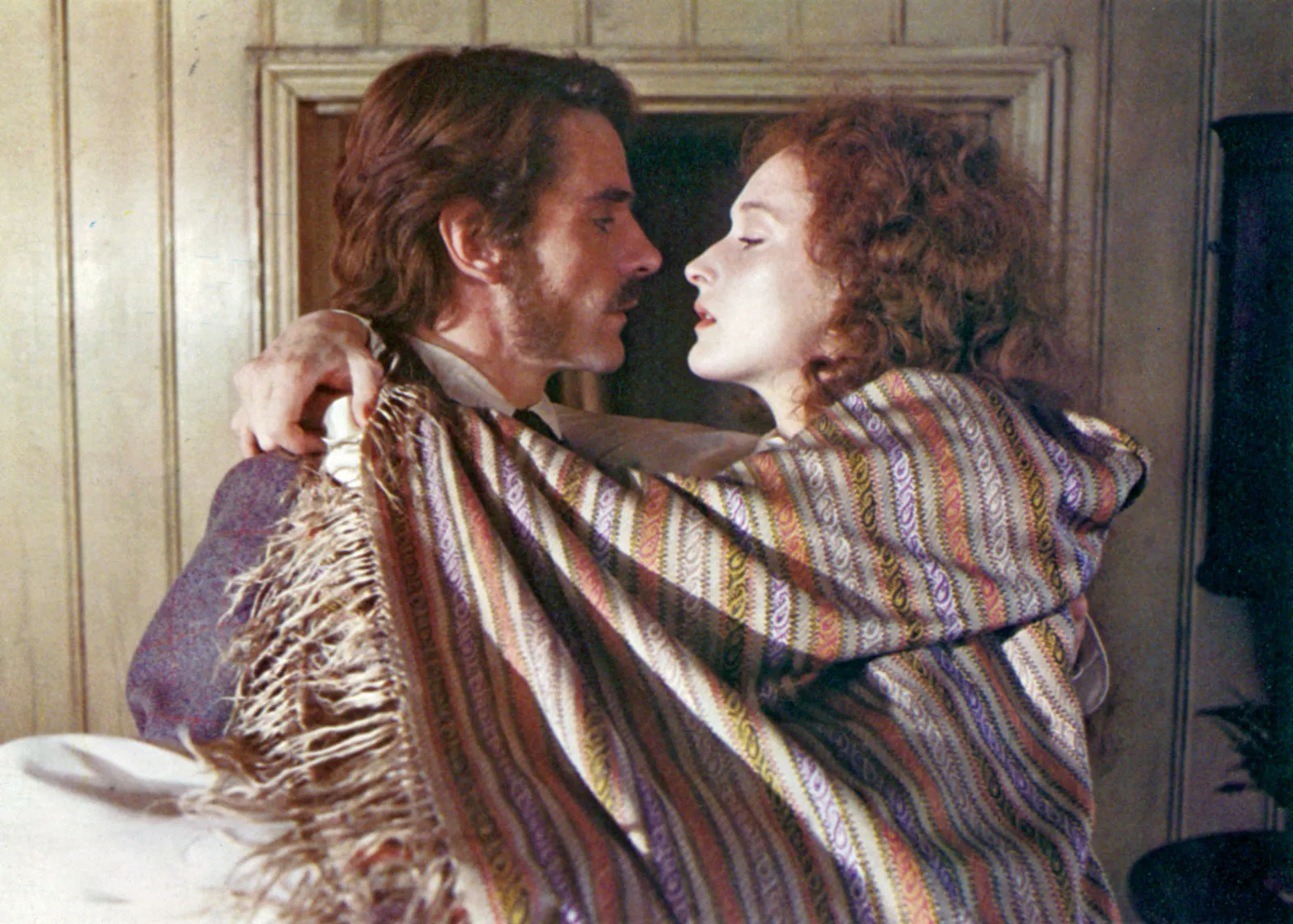
THE FRENCH LIEUTENANT’S WOMAN
UK, USA, 1981, DPC, color, 124’
PROTAGONIST OF EUROPEAN CINEMA
Jeremy Irons
➔ MON 9 NOV | 6:00 PM | SCREEN 5
Direction: Karel Reisz
Screenplay: Harold Pinter from the same novel by John Fowles
Cinematography: Freddie Francis
Editing: John Bloom
Production design: Assheton Gorton
Music: Carl Davis
Costumes: Tom Rand
Cast: Meryl Streep (Sarah and Anna), Jeremy Irons (Charles and Mike), Leo McKern (Dr. Grogan), Lynsey Baxter (Ernestina), Patience Collier (Mrs. Poulteney), Hilton McRae (Sam), Emily Morgan (Mary), Peter Vaughan (Mr. Freeman), Penelope Wilton (Sonia), Charlotte Mitchell (Mrs. Tranter)
Producers: Leon Clore
Production: Juniper Films (UK), United Artists (USA)
Parallel stories of a Victorian era tale and actors filming it as a movie are interwoven, starting with Sarah Woodruff, walking to the edge of a sea wall in Lyme, England. Elsewhere in the village, Charles Smithson, a London-based scientist, proposes to Ernestina Freeman, and she accepts. In the modern story, Mike and Anna are asleep in Anna’s room. When Mike answers the call that Anna is late, they realize the crew will know they are sleeping together. In the film Charles and Ernestina notice Sarah at the end of the sea wall and Ernestina reveals that fishermen call her “the French Lieutenant’s Woman.” Ernestina says Sarah is crazy and will not listen, but Charles insists it is not safe to be on the wall in this stormy weather. As Charles approaches, Sarah looks at him and he is captivated by her gaze...
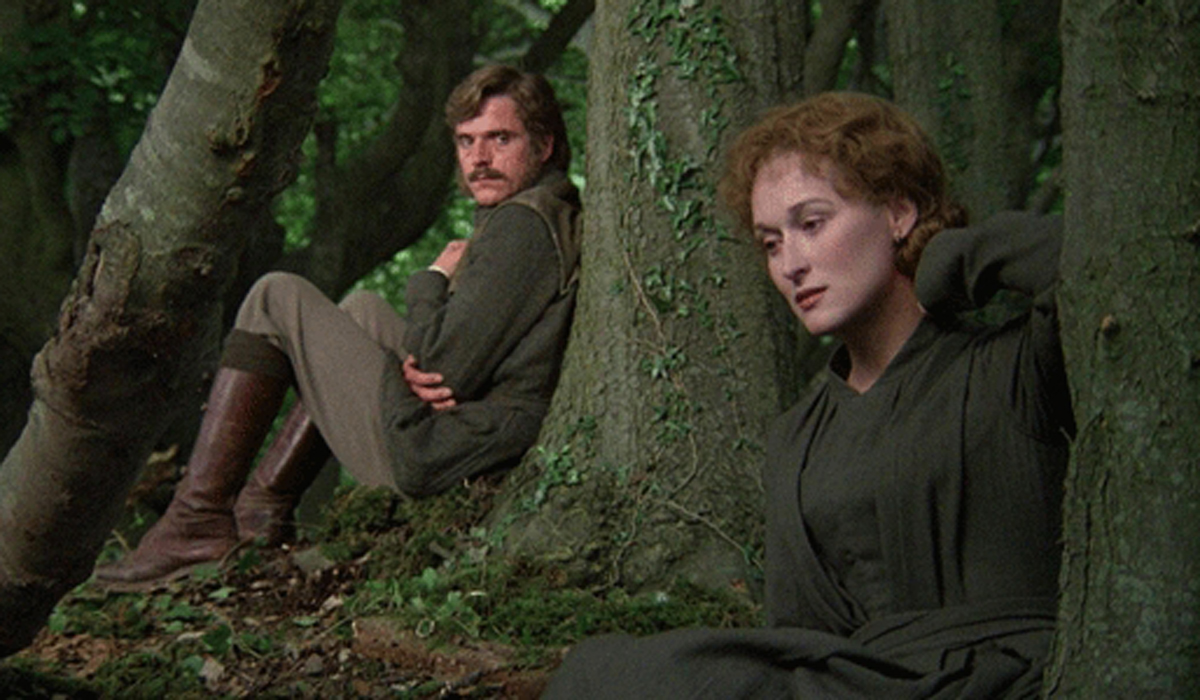
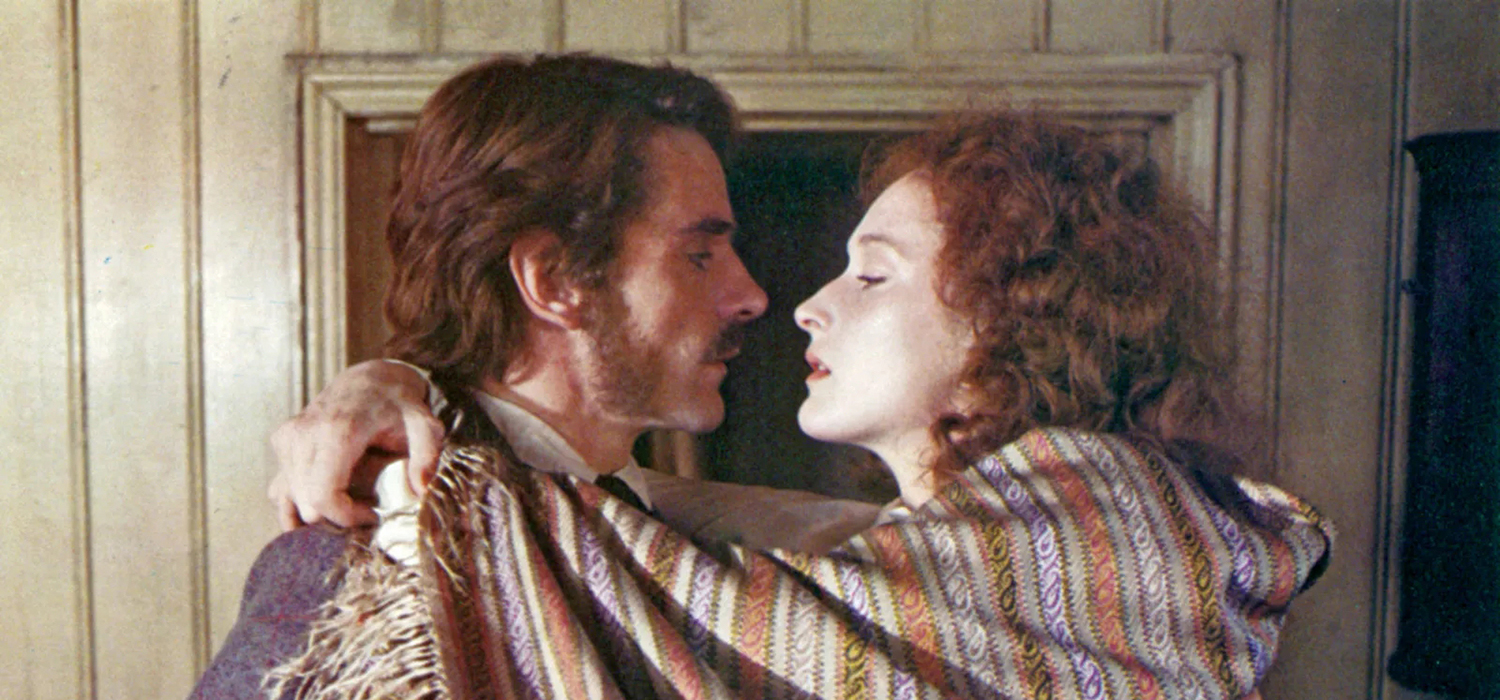
"(...) The French Lieutenant’s Woman is a beautiful film to look at, and remarkably well-acted. Streep was showered with praise for her remarkable double performance, and she deserved it. She is offhandedly contemporary one moment, and then gloriously, theatrically Victorian the next. Opposite her, Jeremy Irons is authoritative and convincingly bedeviled as the man who is frustrated by both of Streep’s characters. The movie’s a challenge to our intelligence, takes delight in playing with our expectations, and has one other considerable achievement as well: It entertains admirers of Fowles’s novel, but does not reveal the book’s secrets. If you see the movie, the book will still surprise you, and that’s as it should be. (...)”
(Roger Ebert, Chicago Sun-Times, January 1, 1981)
1982 Golden Globes, USA: Best Dramatic Actress
1982 Academy Awards: Best Screenplay, Editing, Actress, Production Design, Costumes
1982 David di Donatello: nominated as Best Foreign Screenplay
1982 Bodil Awards: Best European Film
1982 BAFTA Awards: Best Actress, Best Original Score, Best Sound; Jeremy Irons nominated for Best Actor